
Why Maxforce
Motorized Hurricane Screen

MAXFORCE PROVEN PROTECT
Engineered For Excellence
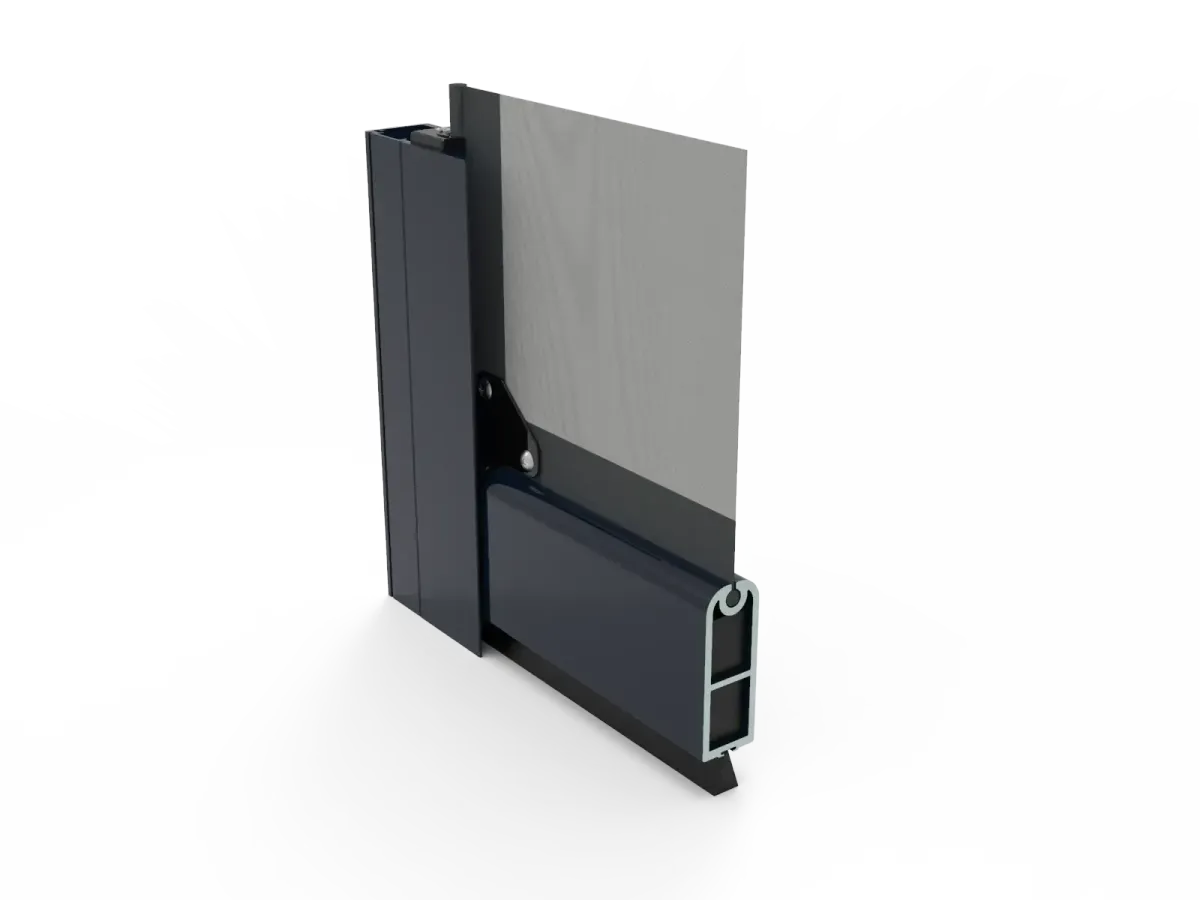
For nearly two decades, MaxForce has manufactured hurricane screens to meet the most demanding building code, the High Velocity Hurricane Zone of Miami-Dade. The MaxForce track is our newest version of the fixed track we have used with great success for high wind applications all over the globe.
The benefits of a fixed track are unmatched strength - this is important when designing a screen system for hurricanes. When you want the strongest system available, and a proven veteran of many hurricanes, the MaxForce Hurricane Track is your best choice.
MAXFORCE THE #1 MOTORIZED HURRICANE SCREEN
Contact A+ Certified MaxForce Screen Dealer Today...

HEADACHE-FREE
Exclusive self-tensioning system eliminates 99.9% of screen issues. No track adjustments, broken zippers, or dislodged screens.

LIFETIME WARRANTY
Exterior shade screens reduce cooling bills and MaxForce hurricane screens reduce insurance premiums in hurricane zones.

HURRICANE STRONG
Our MaxForce tracks and advanced hybrid ballistic fabrics withstand 150+ mph winds. Approved by Florida Building Commission for hurricane zones. Lab and real-world tested.

BUILT TO LAST
We use marine-grade materials such as powder-coated aluminum, UV-protected nylons, stainless steel fasteners, and premium fabrics. Resists corrosion, rust, and screen failure.

COST-SAVING
Exterior shade screens reduce cooling bills and MaxForce hurricane screens reduce insurance premiums in hurricane zones.

SMART CONTROLS
Control MaxForce screens via remote and
phone or integrate with popular home automation systems for advanced
capabilities.

SECURE TRACK
MaxForce Fix Hurricane Track holds firm under extreme loads

MAX CORROSION PROTECTION
Powder Coated Aluminum Protects your investment from exposer and corrosion.

HEAVY-DUTY DESIGN
Our screens are designed to withstand the extreme. High wind, Rain, or Shine, Dust Dirt, Dander, it doesn't matter. MaxForce Cover it all.

CUSTOM-MADE SCREENS
Tailor-made screens with vast color, fabric, and system options. Custom paint color and fabric matching are available.
MAXFORCE THE #1 MOTORIZED HURRICANE SCREEN
Contact A+ Certified MaxForce Screen Dealer Today...
MAXFORCE
Ready For Life's Storms
MAXFORCE HURRICANE SCREEN SYSTEM
A Certified, Tested System...
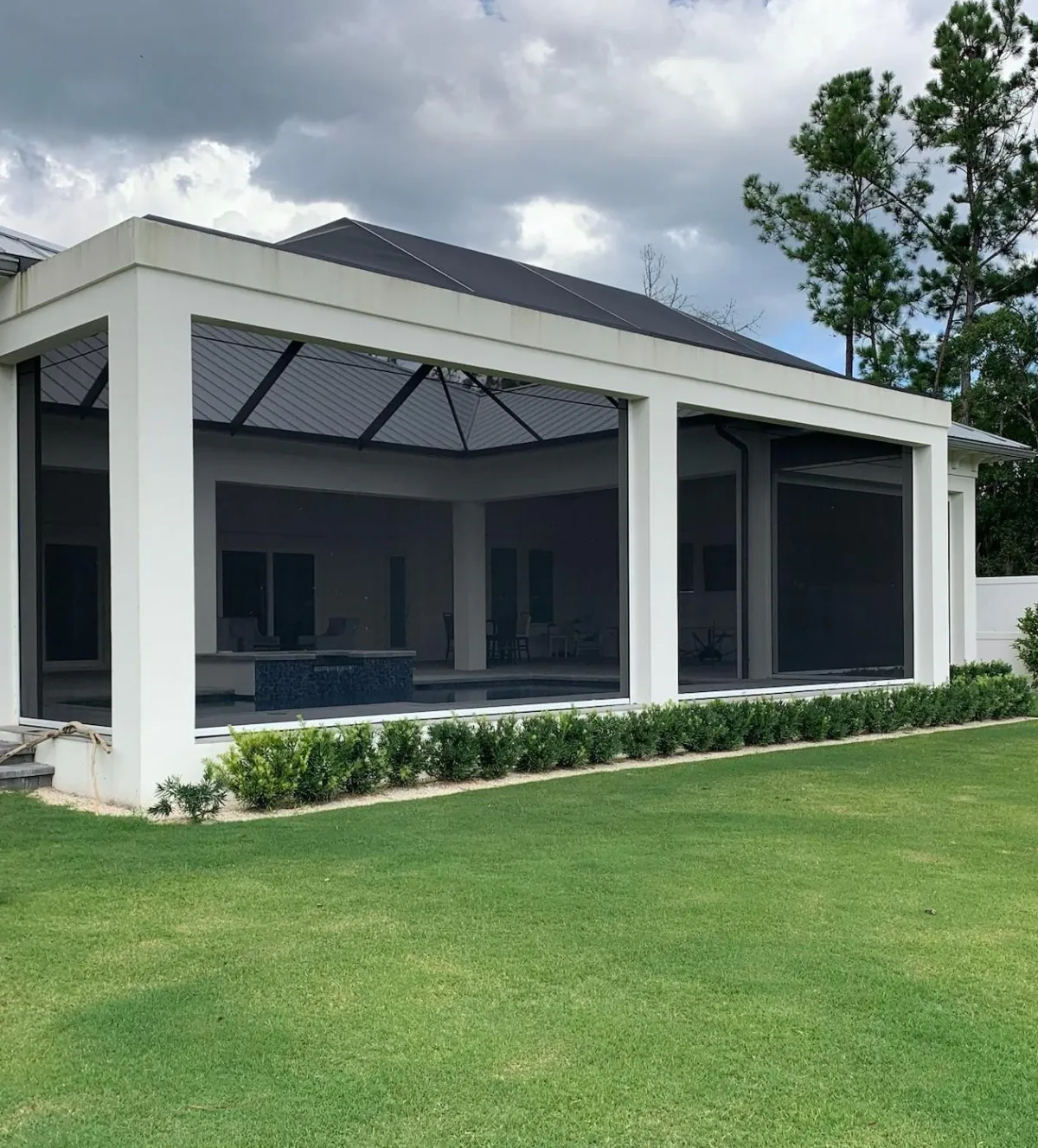
The MaxForce Hurricane Screen System meets or exceeds Miami-Dade and Florida Building Code requirements—the toughest hurricane codes on earth—for roll-down hurricane screens. Rated for the 185 MPH wind zone, and with real-world and certified testing. With spans of up to 25 feet, they exceed performance criteria for all local and International Building Codes.
MAXFORCE THE #1 MOTORIZED HURRICANE SCREEN
Contact A+ Certified MaxForce Screen Dealer Today...
THE MAXFORCE DIFFERENCE
Maxforce Hurricane Screen
MaxForce Hurricane Screens, powered by our MaxForce system, meet the toughest standards—including HVHZ certification in Miami-Dade and Broward. They last longer, resist more, and do more than any screen on the market—proven protection without compromise.
MaxForce Hurricane Screens —Delivers 365 days of perfect protection, rain or shine, on your patio and lanai. With the push of a button or a tap on the mobile app, your patio is storm-ready— furniture and openings fully protected in seconds.
MaxForce Hurricane Screens fabric blocks up to 95% of the sun’s damaging UV-rays while shielding against wind, rain, insects, dust, and debris. It also helps reduce heat and lower energy costs by limiting solar exposure—comfort and protection in one smart solution.
Like all Maxforce products, our MaxForce Hurricane Screens are highly customizable and built to order—made to fit your exact openings. No guesswork, no compromises—just precision-fit protection tailored to your space.
Pair our retractable MaxForce Hurricane Screens with other Maxforce screens for customized and independent solutions. Each screen operates independently, giving you the protection you want when you need it.
MaxForce Hurricane Screens offer built-in privacy without blocking your view. Like a two-way mirror, you can see out—but neighbors and passersby can not see in. It provides the perfect blend of openness and seclusion, day or night.
MAXFORCE THE #1 MOTORIZED HURRICANE SCREEN
Contact A+ Certified MaxForce Screen Dealer Today...
INTEGRITY MATTERS
How MaxForce Is Made Matters
AMERICAN INGENUITY
Made in the USA

Proudly Made in the USA—every MaxForce screen is built with American strength, precision, and pride. From the smallest components to the final assembly, our materials are sourced and manufactured right here in the United States. No outsourcing. No compromises. Just hardworking Americans protecting American homes with the toughest screen system on the market.
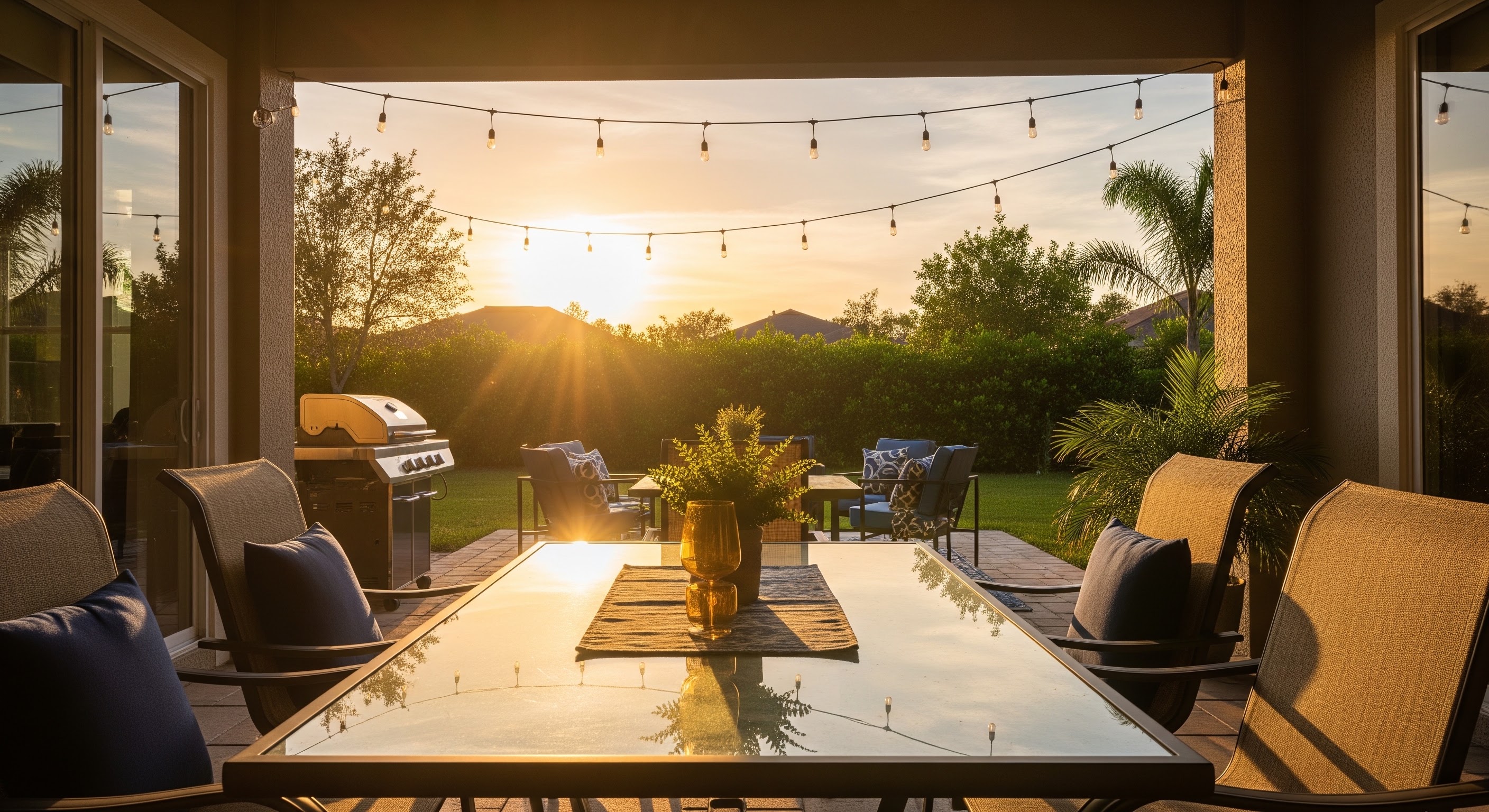
Planning a Labor Day Cookout in Fort Walton Beach? Here's What Two Weeks of Love Bugs and Sun Does to an Unenclosed Yard
Planning a Labor Day Cookout in Fort Walton Beach? Here's What Two Weeks of Love Bugs and Sun Does to an Unenclosed Yard
If you're planning to host on Labor Day, two weeks out is already the point where an open Fort Walton Beach backyard starts working against you — not the week before. The holiday lands directly inside the second of Florida's two annual love bug swarms, and it's the tail end of a summer where an uncovered patio has been catching full afternoon sun for months. Neither problem announces itself the day before the party. Both are already underway right now.
This is the first piece in a four-part series on getting a Fort Walton Beach-area backyard ready for Labor Day. See the full series.
Two weeks out is already late, not early
There's a habit of treating outdoor-hosting prep as a weekend-before job — clean the grill, wipe down the furniture, done. That works for a yard that's already comfortable and pest-controlled. It doesn't work for a yard that's been sitting open and unshaded all summer, because the two conditions that make an open patio unpleasant in Fort Walton Beach in early September aren't things that show up the morning of the party. They're already there, and they've been building for weeks.
The bug timing nobody plans a party around
Love bugs are one of the more specifically-timed nuisances in Florida. Per University of Florida entomology research (Leppla, UF/IFAS EDIS ENY-840), the insect swarms in two predictable annual windows — April through May, and again August through September — with each active period lasting a few weeks. Labor Day 2026 falls on September 7, which sits inside that second window, not near the edge of it.
Love bugs don't bite, and they're mostly a windshield-and-porch-light nuisance rather than a health concern. Mosquitoes are the bigger comfort problem in the same window: per UF/IFAS, July through September is the peak of both Florida's rainy season and its mosquito season, since daily downpours create fresh standing water for breeding. An open yard is exposed to both at the same time, on the same weekend most Fort Walton Beach households are trying to host outside.
320 days of sun sounds nice until you're hosting at 2 PM
Aluminum Building Systems, the Fort Walton Beach-based builder behind this series, markets the region as getting roughly 320 days of sun a year — its own figure, not an independently measured meteorological statistic, and worth reading as a general regional characterization rather than a precise count. Directionally, it matches what anyone who has hosted an afternoon gathering on an open Northwest Florida patio already knows: shade, not temperature alone, is usually what determines whether people actually want to stay outside past the first hour.
By late August, an uncovered patio has had an entire summer of that exposure. It's not a new problem the holiday creates — it's a standing one the holiday simply exposes to guests.
The bugs are seasonal. The sun exposure is cumulative. Neither is solved by cleaning up the morning of the party.
What the sources above don't settle: exactly how dense love bug or mosquito activity will be on any individual property in any given year — UF's own research notes swarms can reach outbreak levels in some areas and be largely absent in others in the same season. This piece describes a regional pattern, not a guaranteed outcome for a specific address.
What this means if you're hosting on Labor Day
If your Labor Day plan depends on people being comfortable outside for a few hours, two weeks out is the right time to look honestly at whether the yard delivers that — not the weekend before, when the only options left are the ones you can do yourself. The next piece in this series is a practical one: with about a week left, which structure — screen room, pool enclosure, or patio cover — actually gets a yard Labor-Day-ready in time, and which is a next-year decision. See ABS's Fort Walton Beach page in the meantime for what's already built in the area.
Frequently Asked Questions
Why does love bug season matter for a Labor Day party specifically?
Because the timing lines up almost exactly. UF/IFAS research documents love bugs swarming in two annual windows, April–May and August–September, and Labor Day 2026 (September 7) falls squarely inside the second one — not near its edge.
Is an open patio really unusable for two weeks before the holiday?
"Unusable" is strong; "uncomfortable for guests sitting outside more than an hour" is the more accurate claim, driven by a combination of ongoing sun exposure and the same window's peak mosquito and love bug activity per UF/IFAS.
What actually fixes this — a screen enclosure, or something else?
It depends which problem matters more on your property — sun, bugs, or both — and how much time is actually left before the holiday. The next post in this series walks through screen rooms, pool enclosures, and patio covers specifically for a one-week-out decision.
Sources
Leppla, Norman C. Living with Lovebugs. UF/IFAS EDIS ENY-840. Revised Sept. 2009, Dec. 2015; reviewed Dec. 2018.edis.ifas.ufl.edu
University of Florida IFAS Extension.Florida experts break down the buzz on the myth of mosquito-repelling plants. Aug. 2025.blogs.ifas.ufl.edu
Aluminum Building Systems. Regional sun-exposure characterization ("320 days of sun").screenflorida.com— self-reported, disclosed as such.

Planning a Labor Day Cookout in Fort Walton Beach? Here's What Two Weeks of Love Bugs and Sun Does to an Unenclosed Yard
Planning a Labor Day Cookout in Fort Walton Beach? Here's What Two Weeks of Love Bugs and Sun Does to an Unenclosed Yard
If you're planning to host on Labor Day, two weeks out is already the point where an open Fort Walton Beach backyard starts working against you — not the week before. The holiday lands directly inside the second of Florida's two annual love bug swarms, and it's the tail end of a summer where an uncovered patio has been catching full afternoon sun for months. Neither problem announces itself the day before the party. Both are already underway right now.
This is the first piece in a four-part series on getting a Fort Walton Beach-area backyard ready for Labor Day. See the full series.
Two weeks out is already late, not early
There's a habit of treating outdoor-hosting prep as a weekend-before job — clean the grill, wipe down the furniture, done. That works for a yard that's already comfortable and pest-controlled. It doesn't work for a yard that's been sitting open and unshaded all summer, because the two conditions that make an open patio unpleasant in Fort Walton Beach in early September aren't things that show up the morning of the party. They're already there, and they've been building for weeks.
The bug timing nobody plans a party around
Love bugs are one of the more specifically-timed nuisances in Florida. Per University of Florida entomology research (Leppla, UF/IFAS EDIS ENY-840), the insect swarms in two predictable annual windows — April through May, and again August through September — with each active period lasting a few weeks. Labor Day 2026 falls on September 7, which sits inside that second window, not near the edge of it.
Love bugs don't bite, and they're mostly a windshield-and-porch-light nuisance rather than a health concern. Mosquitoes are the bigger comfort problem in the same window: per UF/IFAS, July through September is the peak of both Florida's rainy season and its mosquito season, since daily downpours create fresh standing water for breeding. An open yard is exposed to both at the same time, on the same weekend most Fort Walton Beach households are trying to host outside.
320 days of sun sounds nice until you're hosting at 2 PM
Aluminum Building Systems, the Fort Walton Beach-based builder behind this series, markets the region as getting roughly 320 days of sun a year — its own figure, not an independently measured meteorological statistic, and worth reading as a general regional characterization rather than a precise count. Directionally, it matches what anyone who has hosted an afternoon gathering on an open Northwest Florida patio already knows: shade, not temperature alone, is usually what determines whether people actually want to stay outside past the first hour.
By late August, an uncovered patio has had an entire summer of that exposure. It's not a new problem the holiday creates — it's a standing one the holiday simply exposes to guests.
The bugs are seasonal. The sun exposure is cumulative. Neither is solved by cleaning up the morning of the party.
What the sources above don't settle: exactly how dense love bug or mosquito activity will be on any individual property in any given year — UF's own research notes swarms can reach outbreak levels in some areas and be largely absent in others in the same season. This piece describes a regional pattern, not a guaranteed outcome for a specific address.
What this means if you're hosting on Labor Day
If your Labor Day plan depends on people being comfortable outside for a few hours, two weeks out is the right time to look honestly at whether the yard delivers that — not the weekend before, when the only options left are the ones you can do yourself. The next piece in this series is a practical one: with about a week left, which structure — screen room, pool enclosure, or patio cover — actually gets a yard Labor-Day-ready in time, and which is a next-year decision. See ABS's Fort Walton Beach page in the meantime for what's already built in the area.
Frequently Asked Questions
Why does love bug season matter for a Labor Day party specifically?
Because the timing lines up almost exactly. UF/IFAS research documents love bugs swarming in two annual windows, April–May and August–September, and Labor Day 2026 (September 7) falls squarely inside the second one — not near its edge.
Is an open patio really unusable for two weeks before the holiday?
"Unusable" is strong; "uncomfortable for guests sitting outside more than an hour" is the more accurate claim, driven by a combination of ongoing sun exposure and the same window's peak mosquito and love bug activity per UF/IFAS.
What actually fixes this — a screen enclosure, or something else?
It depends which problem matters more on your property — sun, bugs, or both — and how much time is actually left before the holiday. The next post in this series walks through screen rooms, pool enclosures, and patio covers specifically for a one-week-out decision.
Sources
Leppla, Norman C. Living with Lovebugs. UF/IFAS EDIS ENY-840. Revised Sept. 2009, Dec. 2015; reviewed Dec. 2018.edis.ifas.ufl.edu
University of Florida IFAS Extension.Florida experts break down the buzz on the myth of mosquito-repelling plants. Aug. 2025.blogs.ifas.ufl.edu
Aluminum Building Systems. Regional sun-exposure characterization ("320 days of sun").screenflorida.com— self-reported, disclosed as such.

COMPANY
QUICK LINKS
LEGAL
FOLLOW US


© 2026 Fenetex Lead Nexus | A Fenetex Corporation | All Rights Reserved